
Fox & Roku Just Won the Video Brand Loyalty Wars (Before We Even Knew This Was a Thing)
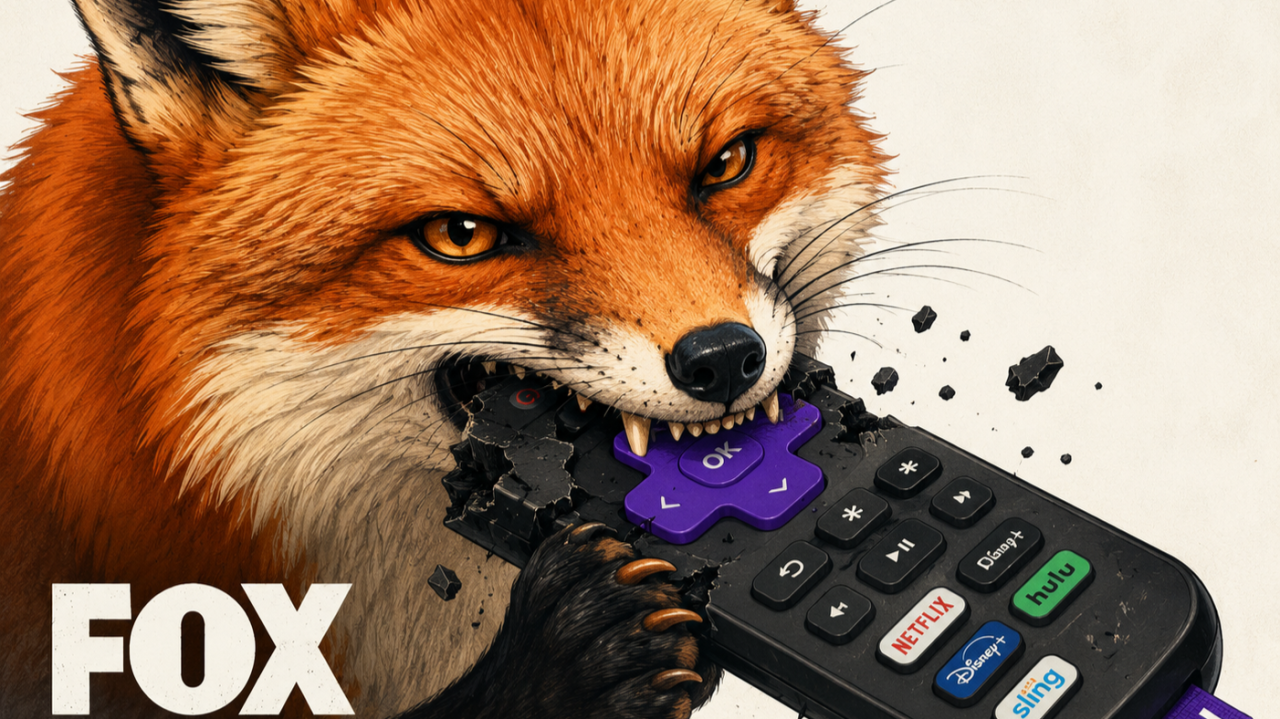
The response to the Fox acquisition of Roku seems to be universally positive-- great move for Fox. I'm certainly not here to rain on that parade; I share the sentiment. First off, because the firmament of video advertising is obviously shifting, and a "core four" broadcast network owner like Fox needs to be structured to compete with the Skydance/Paramount/Time/Warner/Turner/CBS/Viacom/Discovery's of the world.
But when I saw the deal announced, I was reminded of one of my fundamental laws of marketing (someday I'll write an article about my 10 laws of marketing, as soon as I can get to 10). To wit: Brand Loyalty Tends to Live at the Point of Customer Interface.
Suppose your preferred toothpaste is Crest, but you buy toiletries in bulk at CostCo, and the only toothpaste they carry at CostCo is Colgate. You're going to buy Colgate. Brand loyalty lives at the point of customer interface, and the point of customer interface is the retailer.
Suppose you are a dedicated Android user. You might switch from a Samsung to a Motorola to a Google to an Xiaomi phone-- as long as it runs Android. Brand loyalty lives at the point of customer interface, and the point of customer interface is the OS.
Now think about streaming services. The popular platforms all deal with churn. It is not uncommon for consumers to subscribe into a platform, watch the shows they want to see, and then unsubscribe out. But if you use Roku (we have a Roku for every set in each of two homes), you're not going to switch platforms. If Roku stops offering, say, Paramount+, you may well stop watching Paramount+. Brand loyalty lives at the point of customer interface, and the point of customer interface is the Streaming OS. Not the streaming platform; those churn like butter. It's the OS through which you pick your platform that commands brand loyalty.
Linear TV is dying. We know this. We now watch TV via streaming. Streaming platforms do not engender brand loyalty. Has anyone ever said, "If it's not on Hulu, I'm not watching it!"? But the OS (including the remote) does. Fox just cornered the market on brand loyalty among the major TV publishers.
Now at this point, one might be tempted to note that smart TV penetration is so high that eventually the Roku, Chromecast, and Firestick market will collapse. But Roku absolutely understands that they are in the OS business, not the hardware business.
Get this. Over a third of smart TVs in the US run on the Roku OS. Not the sticks. The Smart TVs.
Over a third.
Roku is the Apple of TV. (I know, you'd think Apple would be. They're not.) In addition to their OS share of Smart TVs, Roku accounts for half of all OTT devices in the US (Comscore; see link below).
In addition to the raw power of Fox properties in that unique space of linear-TV-that-is-must-watch-live (already a space they dominate), now they have a dominant position in the TV OS space.
It is worth noting that there is one thing that trumps brand loyalty: fandom. Indeed, one can think of fandom as hyper-brand loyalty. We've all seen books and articles on turning customers into fans. Well, if you're the NFL, or MLB, or NASCAR, or the World Cup, you already know this. Your customers already ARE fans.
All those properties are carried by Fox.
And Fox is very much aware of the value of fandom; just check out the LinkedIn posts from Fox SVP, Research & Data, Ad Sales (and personal bestie) Kym Frank. They know what they're doing.
With all the splashy M&A in the video/ad tech space recently, it is possible that people may have overlooked Fox, a brand name we've perhaps come to instinctively associate with the aging news viewer. But boy, is that wrong. They've just pulled ahead of the pack in brand loyalty in the video space, and that's a major deal.